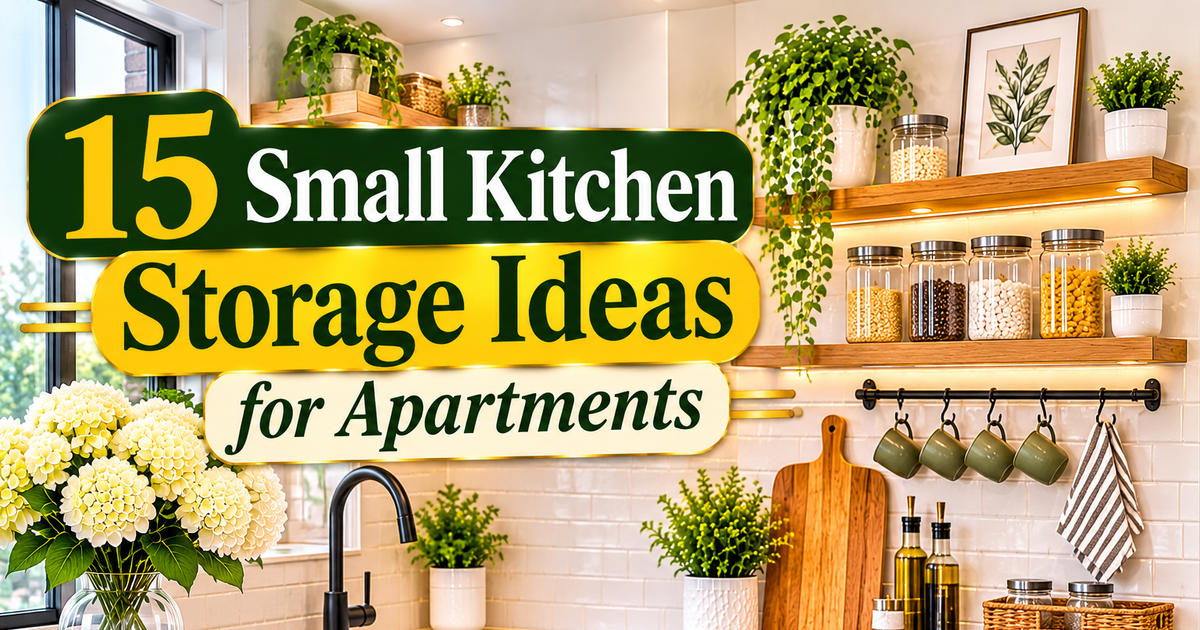
The kitchen in my first apartment had four cabinets, three drawers, and about eighteen inches of usable counter. I remember standing in it with a box of cookware, genuinely unsure where a colander was supposed to live. It took me a few months, and a few bad purchases, to figure out that apartment kitchens don’t need more stuff to solve the storage problem. They need a smarter way of using the space that’s already there.
If you’re working with a galley layout, a rental with no room for renovation, or a kitchen the size of a hallway, these fifteen ideas can help. Most are renter-friendly, and none require a contractor.
1. Declutter Before You Buy Any Storage

It’s tempting to order organizers right away, but storage products can simply hold clutter more neatly. Pull everything out of one cabinet, sort it into keep, donate, and toss, and be honest about what you use. Duplicate utensils, expired spices, and that appliance you’ve used twice are the usual culprits. You’ll often find you need less storage than you thought.
2. Use Shelf Risers Inside Cabinets
Most cabinets waste vertical space, with a stack of plates and a lot of air above them. A simple shelf riser or stackable rack lets you use that height for bowls, mugs, or cans. Choose sturdy ones, and don’t overload them with heavy cookware, which can warp cheaper models.
3. Hang Things on the Inside of Cabinet Doors
The backs of cabinet doors are free real estate. Adhesive or over-the-door hooks and slim racks can hold measuring cups, cutting boards, pot lids, or cleaning supplies. Check the door’s weight tolerance and make sure the door still closes without hitting shelves inside.
4. Add a Wall-Mounted Rail
A stainless or wooden rail with S-hooks holds utensils, mugs, small pots, and a towel, all within easy reach. It frees up drawer space and keeps your most-used tools handy. If drilling isn’t allowed, adhesive-mounted rails exist, though heavier loads need proper anchors, so read the weight limits closely.
5. Use a Magnetic Knife Strip
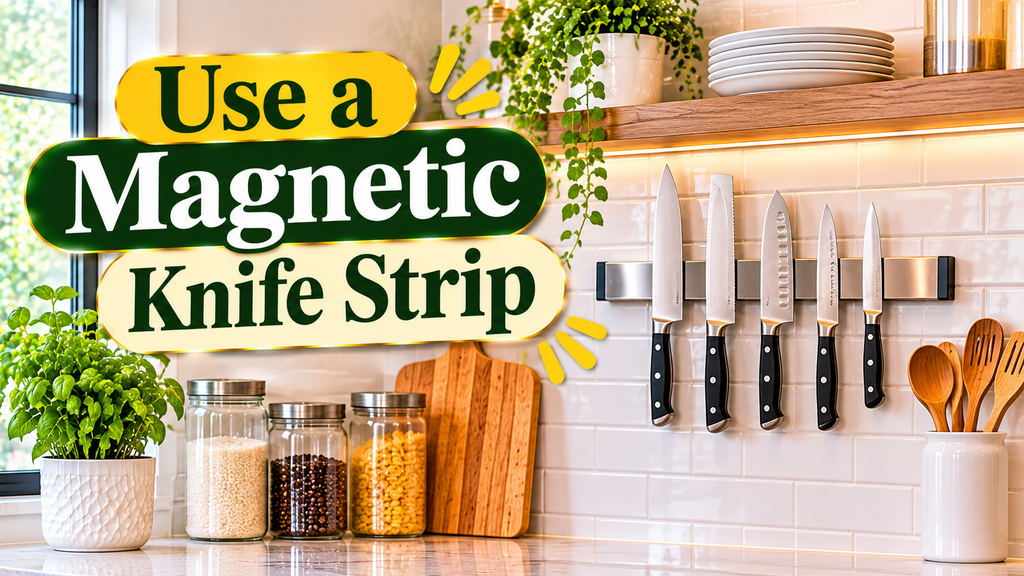
A magnetic strip takes a bulky knife block off the counter and clears a drawer. It also keeps blades visible and accessible. Mount it out of reach of children, and make sure it’s securely anchored, since it’s holding sharp objects.
6. Install Floating Shelves
A couple of shelves above the counter or beside a window give you space for jars, plates, and cookbooks. Keep the contents edited so they look intentional, and place them away from the stove, where grease builds up. Use wall anchors rated for the load, and secure into studs wherever possible.
7. Try Under-Shelf Baskets
These slide-on or clip-on baskets hang beneath existing shelves, adding a bonus layer for foil, snacks, or produce. They’re cheap and require no tools. They work best on shelves with a clear lip to grab, so measure the thickness before buying.
8. Make Use of the Space Above the Cabinets
If there’s a gap between your cabinets and the ceiling, use it for items you rarely need: a large serving platter, a stand mixer, or seasonal cookware. Baskets with lids keep dust off and look tidy. Don’t store anything heavy or fragile where you can’t reach it safely, and keep items away from the stove’s heat.
9. Use Drawer Dividers and Organizers
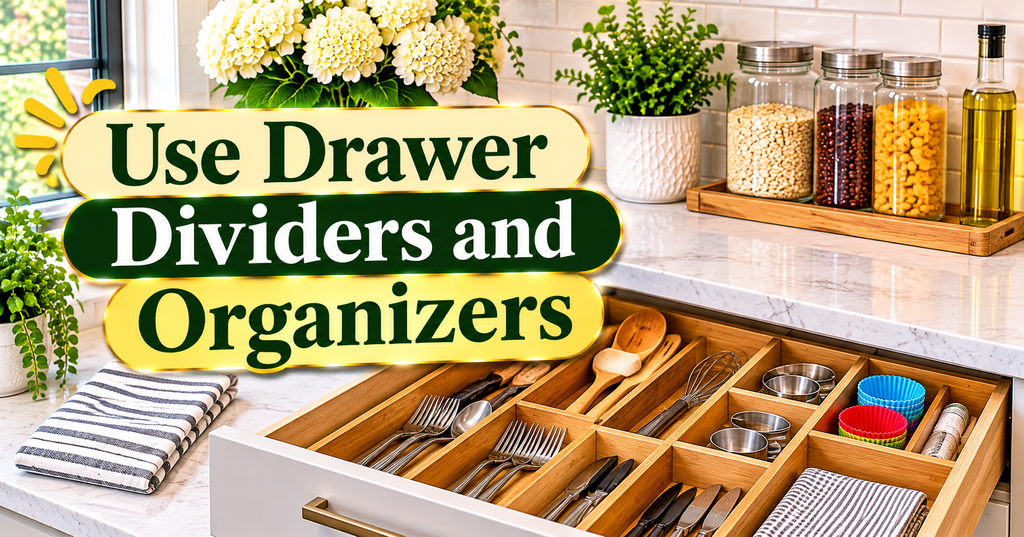
A messy drawer slows you down every day. Dividers keep utensils, cutlery, and gadgets in separate lanes, and you can often fit more in a well-organized drawer. Bamboo or plastic trays are inexpensive, and you can even repurpose small boxes you already own. Measure the drawer first so the pieces fit snugly.
10. Add a Rolling Cart
A slim rolling cart, ideally 12 to 18 inches wide, slides into a gap beside the fridge or stove and holds spices, oils, or canned goods. It’s the sort of thing that can double as extra prep space when you pull it out. Pick one with locking wheels, and make sure it doesn’t block an appliance’s ventilation or door swing.
11. Use the Fridge Top and the Gap Beside It
The top of a refrigerator can hold a bread basket, cereal, or lightweight kitchen items. A narrow gap between the fridge and the wall is perfect for a tall, slim pull-out rack. Avoid placing heavy or flammable items on top of the fridge, which can get warm from the appliance’s coils.
12. Choose Stackable, Matching Containers
Uniform containers stack neatly and take up less room than a jumble of mismatched ones. Use airtight jars for staples like flour, rice, and pasta, which also keeps food fresh and discourages pests. You don’t need to replace everything at once. Start with the items you buy most often, and reuse clean glass jars if you like.
13. Take Advantage of the Sink Area
Under-sink space is awkward but usable. A tiered organizer, a tension rod for spray bottles, or a small caddy keeps cleaning supplies from toppling over. On the counter, a slim over-the-sink drying rack saves space compared to a bulky dish rack. Store chemicals safely away from children and pets, and never mix products like bleach and ammonia.
14. Use a Pegboard or Wall Grid
A wall grid or small pegboard turns a blank wall into customizable storage for pans, utensils, small shelves, and baskets. It’s flexible, since you can rearrange as your needs change. Pegboards are also forgiving for renters if you use removable mounting methods, though you should check weight limits and your lease.
15. Rethink What Lives in the Kitchen
Not everything has to be stored in the kitchen itself. A bulky roasting pan could go on a shelf in a hallway closet, and a seldom-used blender could live under the bed in a storage bin. Keep daily items within reach and move the occasional ones elsewhere. Storage is a whole-apartment question, not just a cabinet question.
Honest Considerations
Storage solutions can’t fix a kitchen that has too much in it, so be willing to let things go. It’s also easy to over-buy organizers, and a pile of bins from impulse purchases defeats the purpose. Measure first, buy a few items, and see how they work before adding more.
Think about safety and ease of use as well. Heavy items belong at waist height, not up high, and anything above a stove should be minimal and heat-safe. If you have limited mobility or small children, adjust what’s within reach accordingly. In a rental, favor tension, adhesive, and freestanding solutions, and always check your lease before drilling.
Final Thoughts
A small apartment kitchen can work beautifully with the right habits and a few smart additions. Start by clearing out what you don’t use, then make use of vertical space, cabinet doors, and any awkward gaps. Add organizers gradually, and give everything a home. Over time, the kitchen should feel less like a puzzle and more like a place where you can actually cook.
FAQs
Q: How can I add storage to a small apartment kitchen without drilling?
A: Use shelf risers, over-the-door hooks, tension rods, adhesive hooks, and rolling carts.
Q: What should I declutter first in a small kitchen?
A: Start with duplicates, expired food, and appliances or gadgets you rarely use.
Q: Where can I store things if I have no cabinet space?
A: Try wall-mounted rails, floating shelves, a rolling cart, or storing rarely used items in other parts of the apartment.
Q: Are drawer dividers worth it?
A: Yes. They keep utensils organized and often let you fit more into the same drawer.
What’s the best use of vertical space in a small kitchen?
Wall rails, shelves, door racks, and stackable cabinet organizers make the most of height.
Leave a Reply