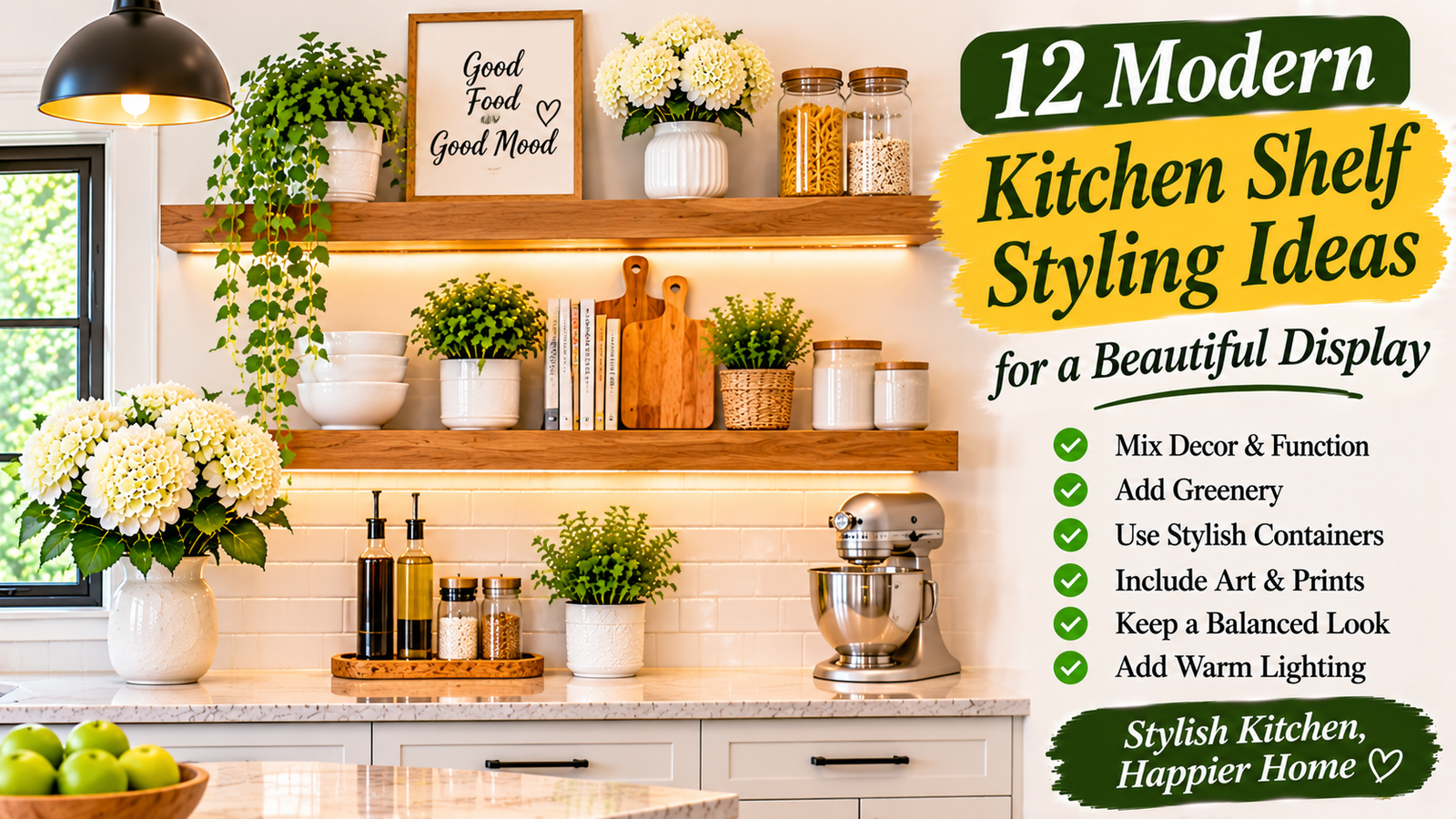
I used to think open kitchen shelves were a design trap. In my first attempt, I lined mine with every mug, bowl, and jar I owned and called it “curated.” Within a week, it looked like a yard sale, and within a month it was coated in a fine film of cooking grease. What fixed it wasn’t buying nicer things. It was learning to edit, group, and leave space.
Modern shelf styling is mostly about restraint, with a few deliberate moments of warmth. Here are twelve ideas that work in real kitchens, including the ones where someone actually cooks.
1. Edit Ruthlessly Before You Style

Take everything off the shelves and put back only what you use often or truly like looking at. Daily plates, favorite mugs, a few jars, a cutting board. Everything else goes into closed storage. A shelf with five good items looks more modern than one with twenty-five decent ones. If you’re unsure, leave an item off for a week and see whether you miss it.
2. Limit the Color Palette
Choose two or three tones and stick to them. White and cream dishes with wood and one accent color, such as sage or charcoal, look calm and cohesive. Mismatched colors read as clutter in a small display. If your everyday dishes are a jumble, put the best-looking ones on show and keep the rest behind doors.
3. Use the Rule of Three
Odd-numbered groupings feel natural rather than staged. Try a stack of plates, a small plant, and a wooden bowl as a trio. Vary the heights so the eye moves along the shelf: something tall, something medium, something low. This simple formula rescues most awkward shelves.
4. Leave Breathing Room
Space is part of the style, not a failure to fill it. Aim to keep roughly a third of each shelf open. Crowded shelves look anxious and are harder to clean. If you feel tempted to add one more object, stop and take one away instead.
5. Mix Functional and Decorative Pieces
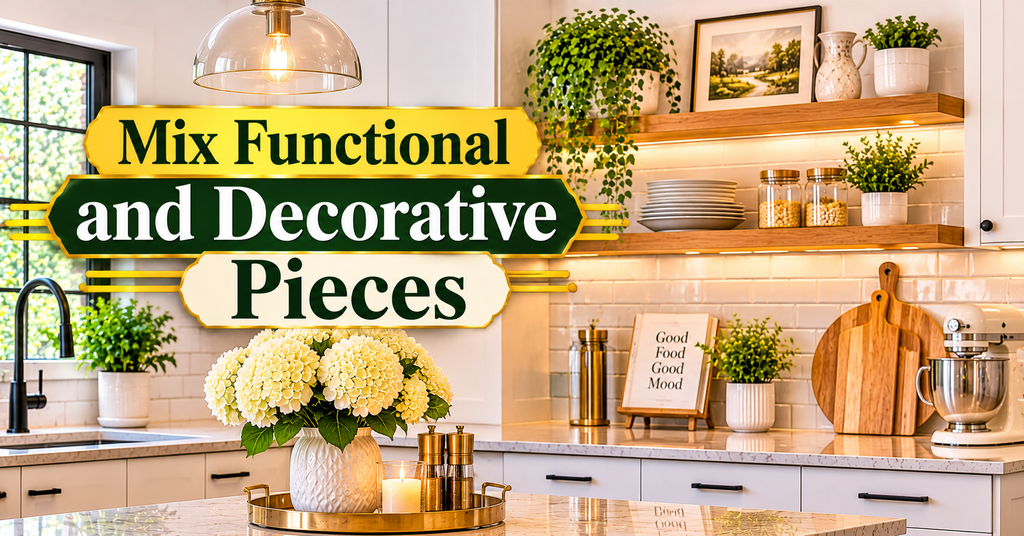
The best displays blend things you use with things you enjoy. A stack of everyday bowls next to a ceramic vase feels lived in, while a shelf of only decorative objects feels like a showroom. Practicality also keeps the shelf honest, since you wash and move items you use regularly.
6. Add Natural Materials
Wood, stone, glass, linen, and clay soften modern kitchens’ clean lines. A wooden cutting board leaning at the back, a marble pestle, a glass jar of pasta, and a woven basket all add texture. Keep materials limited to three or four so the display stays unified.
7. Use Layering for Depth
Instead of lining everything up in a single row, layer items front to back. Lean a cutting board or a framed print against the wall, then place a stack of plates and a small vessel in front. Layering creates depth and a sense of intention. Just make sure you can easily move the front items when you need what’s behind them.
8. Bring in Greenery
A small plant or a trailing herb adds life to a restrained shelf. A pothos in a ceramic pot, a sprig of eucalyptus, or a few stems of fresh herbs work well. Choose plants that tolerate kitchen humidity and light, and keep anything toxic to pets out of their reach. A faux plant is fine if you dust it regularly.
9. Display Cookbooks and Art Sparingly
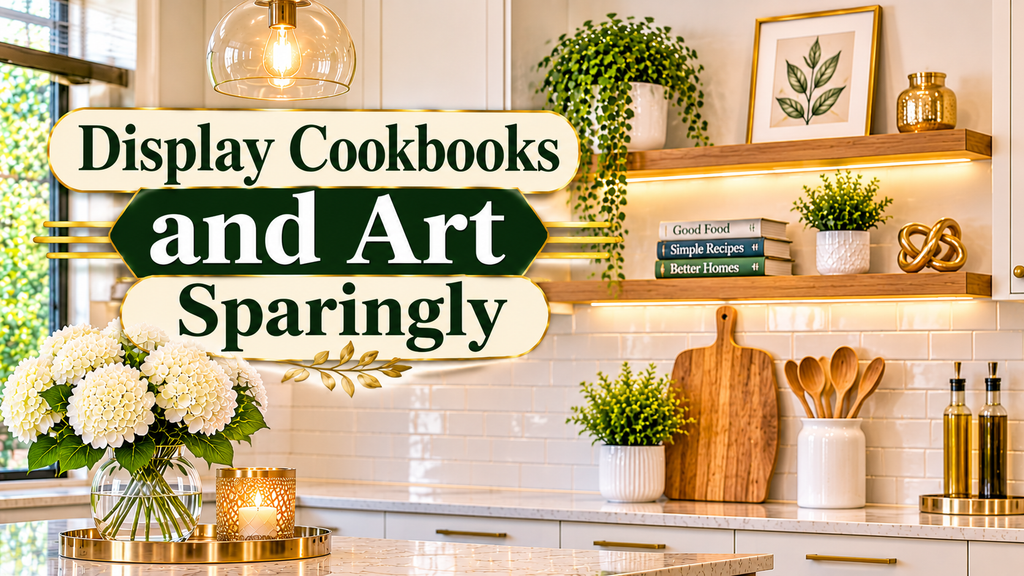
A short stack of favorite cookbooks, with a small object on top, gives a shelf character. A tiny framed print or a postcard leaning at the back adds a personal touch. Keep it to one or two items, and rotate them with the seasons. Avoid putting books or paper too close to the stove, where steam and grease can ruin them.
10. Choose Cohesive Containers
Matching glass jars, ceramic canisters, or simple labeled tins make staples look neat. You don’t need an expensive set; reuse clean glass jars if you like. Airtight lids keep food fresh and avoid pests. If you decant, label clearly and note expiry dates, since the original packaging often carries those details.
11. Think About Lighting
A shelf comes alive when it’s lit. A slim LED strip under the shelf above, or a small picture light, makes ceramics and glass glow. Use warm bulbs around 2700K to 3000K for a welcoming effect. Plug-in and stick-on options suit renters, and hardwired lighting should be handled by a qualified electrician.
12. Plan for Cleaning and Seasonal Change
Open shelves collect dust and grease, especially near the stove. Wipe them regularly and consider keeping delicate or sentimental items farther from cooking zones. Refresh the display with the seasons, perhaps a bowl of citrus in winter or fresh herbs in summer. Small swaps keep the shelves feeling alive without any major effort.
Honest Considerations
Open shelving isn’t for everyone. It requires tidiness, regular cleaning, and a willingness to be on show. If you cook with a lot of oil or have a small kitchen with limited ventilation, grease buildup can be a real nuisance. A combination of open and closed storage often works better than going fully open.
Safety and practicality matter too. Make sure shelves are properly anchored to wall studs or with the right anchors, especially if they’ll hold heavy ceramics. Keep breakables away from the edge, and don’t stack items higher than you can safely reach. If you have young children, think about what’s within their grasp. In a rental, choose shelves you can install without drilling, or ask for permission.
It’s also worth remembering that a styled shelf is a snapshot, not a rule. Real kitchens get used, and the display will shift. That’s fine. The goal is a shelf you enjoy, not one frozen in place.
Final Thoughts
A beautiful kitchen shelf comes down to editing, grouping, and a bit of patience. Start with fewer items, limit your palette, vary heights and materials, and leave room to breathe. Add lighting and greenery for warmth, and keep the shelves easy to clean. Treat the display as a living thing that changes with you. The result should look effortless, even if it took a few rounds of trial and error to get there.
FAQs
Q: How do I style kitchen shelves so they don’t look cluttered?
A: Edit down to what you love or use, limit your colors, group items in threes, and leave some space.
Q: What should I put on open kitchen shelves?
A: Everyday dishes, glass jars, wooden boards, small plants, a few cookbooks, and one or two decorative pieces.
Q: How do I keep open shelves from getting greasy?
A: Keep them away from the stove, wipe them regularly, and store frequently used items so they get washed often.
Q: Can I style shelves in a small kitchen?
A: Yes. Use fewer items, light colors, and vertical stacking, and consider adding under-shelf lighting for brightness.
Q: What colors work best for a modern shelf display?
A: Whites, creams, soft grays, and natural wood tones, with one muted accent color, look clean and cohesive.
Leave a Reply