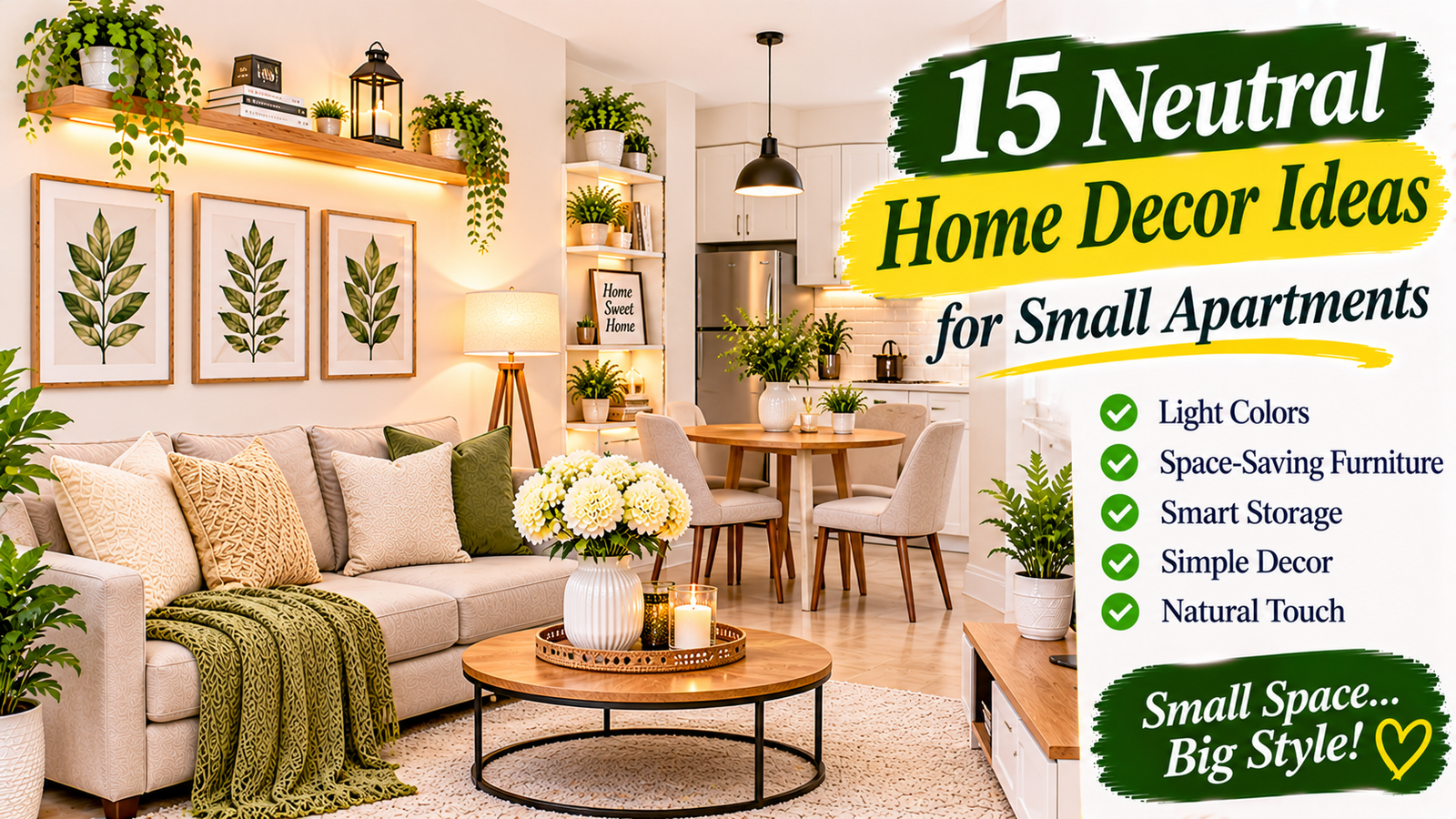
When I moved into my first small apartment, I assumed neutral meant safe, and safe meant dull. I painted everything white, bought a gray sofa, and wondered why the place felt like a dentist’s waiting room. It took a few months, and a lot of trial and error, to understand what was missing. Neutral decor doesn’t fail because of the colors. It fails when it lacks depth, warmth, and texture to hold the eye.
In a small apartment, a neutral palette is an ally. It calms visual noise, reflects light, and makes a compact space feel more connected. Here are fifteen ideas that make it work.
1. Decide on Your Undertone First

Neutrals lean warm (cream, sand, oatmeal) or cool (soft gray, stone, bone). Mixing them without thinking is the most common reason a room looks slightly “off.” Hold paint and fabric swatches against your flooring and any fixed finishes, in both daylight and evening light. A white that looks crisp at noon can turn yellow under lamps. Choose one direction and stay with it.
2. Layer Several Shades Instead of One
An apartment in one flat shade of beige feels like a showroom. Combine three or four related tones: pale walls, a mid-tone sofa, a broader accent in a rug or wood piece. That gentle variation adds depth without loud color and keeps small rooms from looking washed out.
3. Paint Walls in a Warm, Light Shade
Soft whites, creamy greige, and pale putty reflect light and make walls feel farther away. In a small apartment, painting the ceiling a shade lighter than the walls can also add a sense of height. Test large samples on two different walls first. If you rent, check your lease before painting, or rely on textiles and lighting instead.
4. Choose a Sofa Scaled to the Room
A bulky sectional can swallow a small living area. Choose an apartment-sized sofa with slim arms and visible legs, in oatmeal, stone, or warm gray. Showing a bit of floor beneath furniture keeps the room airy. Consider performance fabric or a washable slipcover, since light sofas show every spill.
5. Let Texture Do the Heavy Lifting

When color is quiet, texture does the talking. Mix bouclé, chunky knit, linen, wool, jute, and a touch of leather. A nubby throw against smooth cotton, or a woven basket against a painted wall, gives the eye something to enjoy. If a neutral room feels flat, it usually needs more texture, not more objects.
6. Use a Large, Textured Rug
A rug that’s too small makes a room look choppy. Go larger than feels natural, so at least the front legs of your seating rest on it. Wool or jute in a natural tone grounds the space. Choose one a shade or two different from your sofa so the furniture doesn’t disappear into the floor, and add a rug pad for grip and comfort.
7. Add Natural Wood Tones
Wood keeps neutrals from drifting into blandness. A light oak coffee table, a walnut shelf, or a simple wooden stool brings warmth and a grounded feel. Mix tones lightly, such as one lighter and one deeper wood, so the room looks collected rather than matched. Matte or satin finishes feel calmer than glossy ones.
8. Layer Your Lighting
A single overhead light flattens a small apartment and makes corners look dim. Add a floor lamp, a table lamp, and perhaps a plug-in wall sconce with warm bulbs around 2700K. Linen or paper shades diffuse light softly and flatter neutral walls in the evening. Dimmers are inexpensive and make a surprising difference.
9. Hang Curtains High and Wide
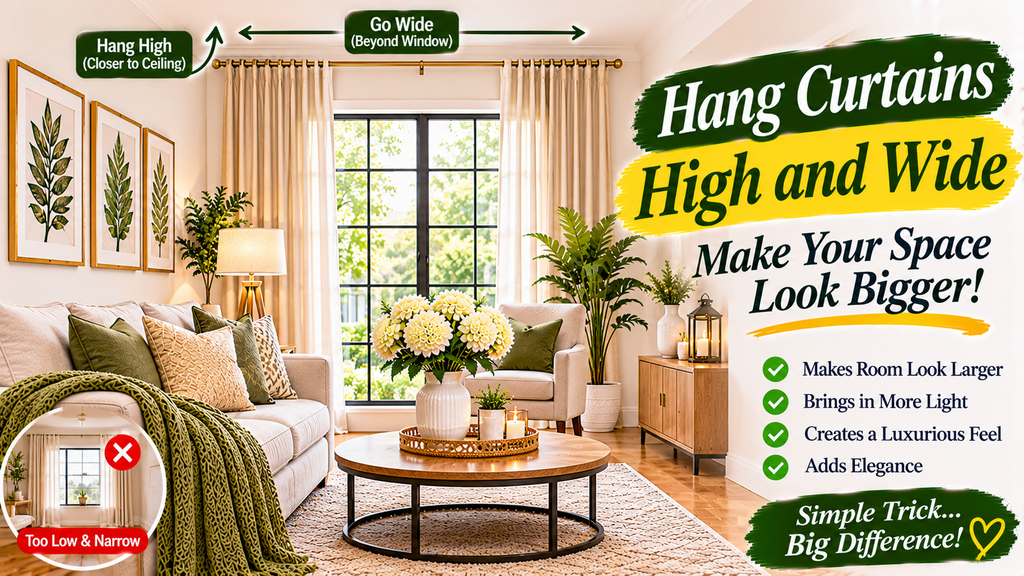
Mount the rod close to the ceiling and extend it past the window frame so the glass stays clear when curtains are open. Floor-length linen or cotton in white, oatmeal, or soft taupe makes ceilings feel taller, and windows feel larger. Add a blackout liner in the bedroom if you need darkness for sleep.
10. Use Mirrors to Multiply Light
A large mirror opposite a window brightens a small room and creates depth. A leaning floor mirror in the entry or bedroom adds a relaxed look. Place mirrors where they reflect something pleasant, like a plant, art, or a lamp, not a pile of clutter. Secondhand mirrors with simple frames are easy to find and often cost little.
11. Add Black in Small Doses
A black picture frame, a slim metal lamp, or an iron side table gives a neutral room definition. It works like punctuation and stops the palette from looking washed out. Three or four touches scattered around the apartment are usually enough. Too much black in a small space can feel heavy, so use it sparingly.
12. Bring In Greenery
Plants provide the one color that never clashes with neutrals. A snake plant, pothos, or rubber plant adds life and softness. One healthy, well-placed plant is better than five struggling ones. Choose varieties that suit your light, and check that anything within reach of pets is non-toxic. Good-quality faux plants are fine if you dust them regularly.
13. Choose Quiet, Meaningful Art
Large pieces in muted tones, black-and-white photography, or soft abstract prints suit a neutral apartment. One oversized piece often looks more elegant than a crowded gallery wall in a small space. Simple wood or black frames keep things tidy. Use removable strips in rentals, and check their weight limits.
14. Hide the Clutter, Style the Rest
Neutral rooms depend on visual calm. Use baskets, lidded boxes, and closed cabinets for everyday items. Keep surfaces edited, with a few objects grouped in odd numbers, such as a book stack, a candle, and a small bowl, and leave space around them. Cable organizers and cord covers help tame the mess behind a TV.
15. Add Personal Touches Over Time
Family photos, travel souvenirs, and handmade ceramics keep a neutral apartment from feeling like a hotel. A calm backdrop actually makes personal items stand out. Don’t rush this step. The best neutral homes feel gathered over time, not bought in a weekend.
Honest Pros and Cons
Neutral decor is flexible, soothing, and easy to update with a new throw or piece of art. It also makes a small space feel cohesive. But it has drawbacks. Light fabrics show stains, especially with pets or kids, so consider washable covers or slightly deeper tones like mushroom or greige rather than pure white. A scheme without contrast can feel sterile, so keep texture, wood, and a few darker accents in the mix. And if you crave color, treat neutrals as the backdrop and rotate in cushions, flowers, or art seasonally.
If you rent, focus on removable changes: rugs, lamps, curtains, plants, and adhesive-hung art. Avoid anything that needs permanent alterations, and check your lease before painting. Keep walkways clear and anchor tall furniture, particularly in small spaces where everything is within reach of children and pets.
Final Thoughts
A neutral small apartment succeeds through restraint, layering, and light. Choose a consistent undertone, vary your shades, add wood and texture, and invest in warm lighting and a good rug. Make changes gradually and notice how each one feels in daily life. Done well, neutral isn’t boring at all. It’s calm, flexible, and quietly personal.
FAQs
Q: What colors count as neutral for an apartment?
A: White, cream, beige, taupe, greige, soft gray, black, and natural wood tones are the most common neutrals.
Q: How do I keep a neutral apartment from feeling boring?
A: Layer different shades, mix textures, add plants and wood, and include a few darker accents for contrast.
Q: Do neutral colors make a small apartment look bigger?
A: Light, warm neutrals reflect daylight and can make a space feel more open, especially with mirrors and minimal clutter.
Q: Can renters decorate in neutrals without painting?
A: Yes. Use rugs, curtains, bedding, lamps, plants, and removable art to build a neutral look without changing the walls.
Q: Should I choose warm or cool neutrals?
A: Warm neutrals feel cozier, while cool ones feel crisper. Pick based on your light and stay consistent.
Leave a Reply