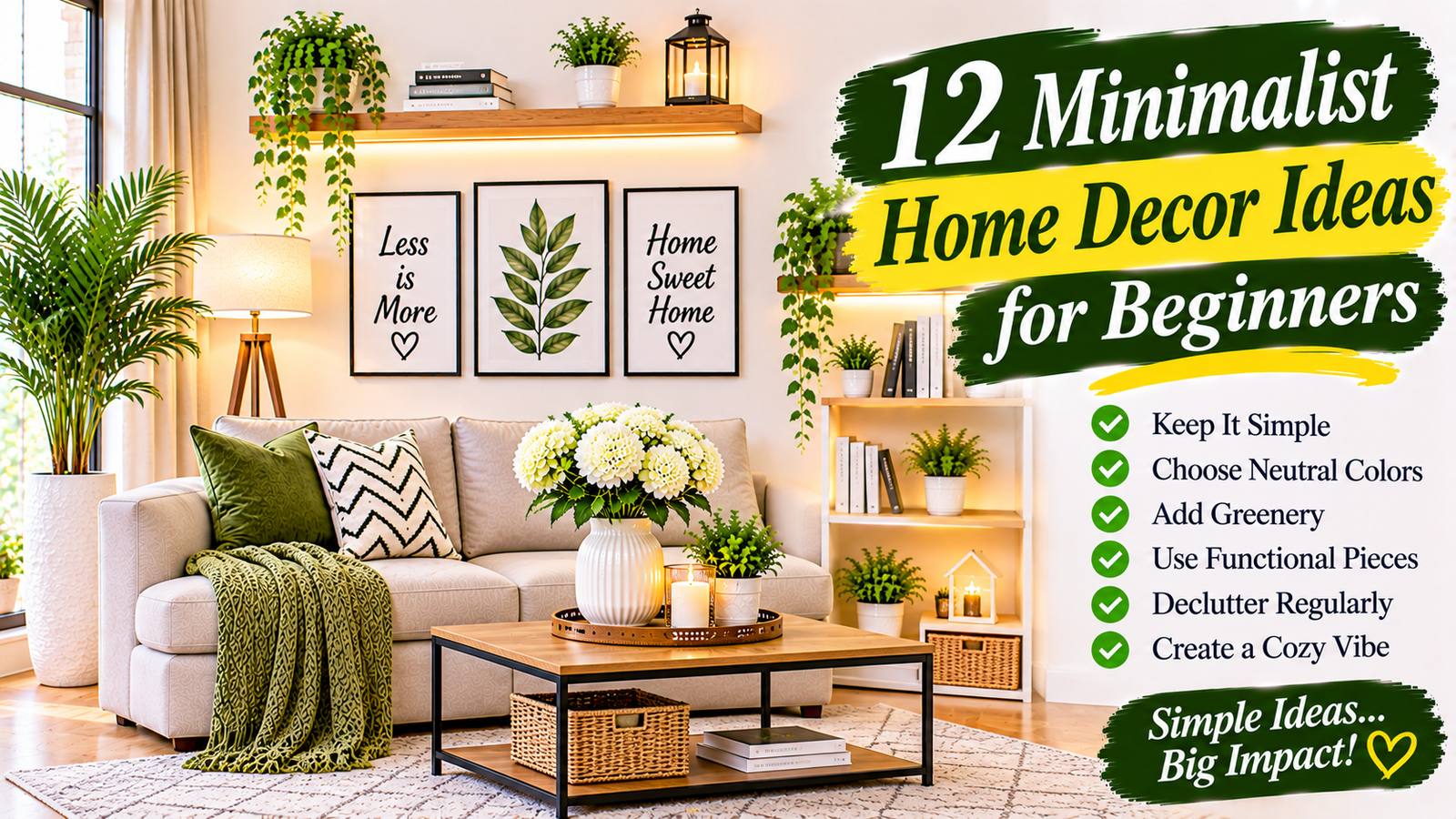
The first time I tried minimalism, I did it wrong. I got inspired by a photo of a bare white room, boxed up half my belongings in one weekend, and bought a few “minimalist” storage baskets to feel better about it. Two weeks later, I was digging through the boxes for a phone charger and wondering why my home felt less like mine. What I eventually learned is that minimalism isn’t a look you copy. It’s a habit of keeping what serves you and giving it room.
If you’re new to it, start gently. Here are twelve ideas that work in real homes, including ones with kids, pets, and too many books.
1. Start With One Small Area
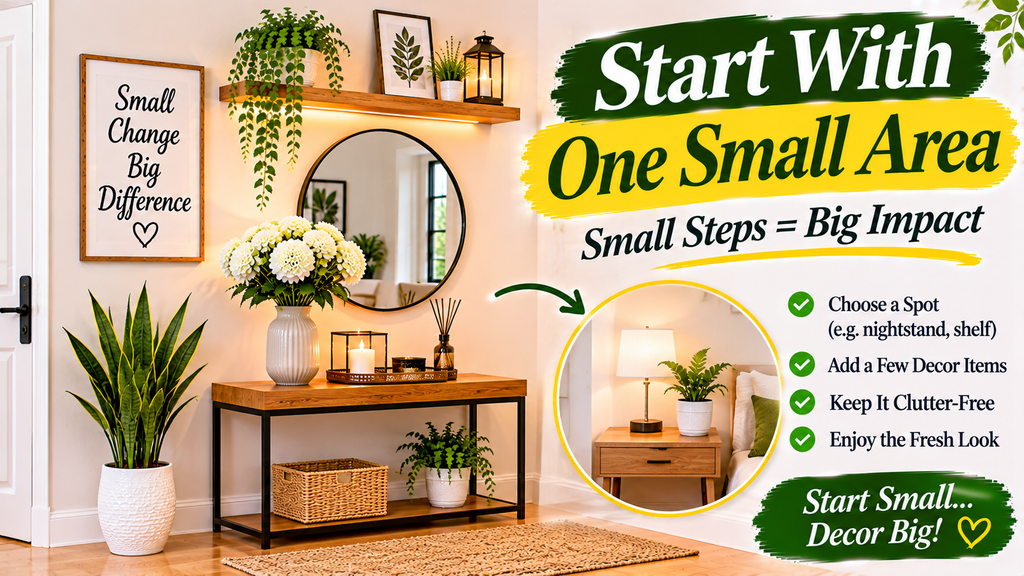
Don’t tackle the whole house at once. Pick one surface, like a coffee table, a nightstand, or a kitchen counter, and clear it completely. Put back only what you use or love. That single tidy spot shows you how it feels and gives you momentum for the next one.
2. Sort Honestly Into Three Piles
When you declutter a drawer or shelf, make three piles: keep, donate, and toss. Be straight with yourself about what you’ve actually used in the past year. Sentimental items are allowed, but give them a deliberate home rather than letting them drift around the house. If you’re unsure about something, put it in a box with a date and revisit it in a few months.
3. Choose a Calm, Limited Color Palette
Stick to two or three colors, ideally soft ones: warm white, greige, sand, or pale sage. A restrained palette quiets visual noise, so the few objects on display feel deliberate. Pure white can feel cold, so consider creamy tones with a warm undertone. Test paint samples in your own light before committing, and check with your landlord if you rent.
4. Buy Fewer, Better Pieces
Minimalism isn’t about buying cheap and replacing often. It’s about owning a few well-made things. A solid sofa, a sturdy table, and a good lamp will serve you longer than a houseful of flimsy items. Wait for what you really need rather than filling gaps with impulse purchases, and consider secondhand quality pieces, which are often better built than new budget furniture.
5. Keep Surfaces Mostly Clear
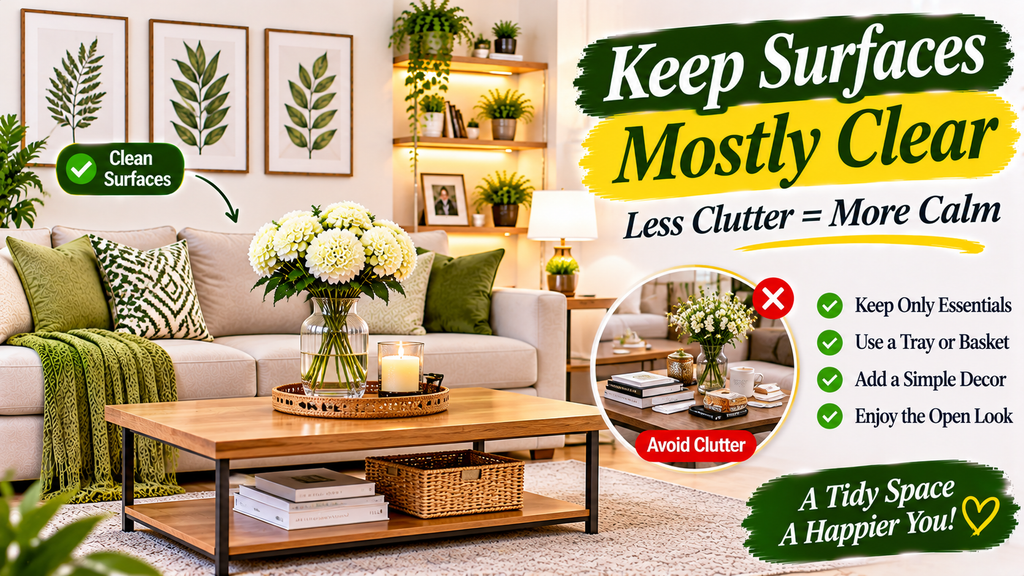
Flat surfaces attract clutter. A good rule of thumb is to leave about half of each surface empty. A coffee table might hold a tray with one book and a candle. A dresser might hold a lamp and a small dish. Group objects in twos or threes and leave space around them so each one can be seen.
6. Use Closed Storage
Baskets with lids, cabinets with doors, and drawers keep daily mess out of sight. Open shelving looks lovely in photos but demands constant tidiness. Be honest about your habits: if you’re not going to restyle a shelf every week, closed storage is the better choice. Don’t buy organizers until you’ve decluttered; otherwise you’ll just store clutter more neatly.
7. Add Texture to Keep It Warm
Minimalist rooms can feel cold if everything is smooth and bare. A chunky knit throw, a linen cushion, a jute rug, and a ceramic vase with an uneven glaze bring warmth without adding color. If a minimalist space feels sterile, the fix is almost always more texture, not more objects.
8. Layer Soft, Warm Lighting
Harsh overhead lighting makes a bare room feel stark. Use warm bulbs around 2700K and spread light across a floor lamp, a table lamp, and perhaps a small wall sconce. A dimmer helps you adjust the mood through the day. Good lighting is often what turns “empty” into “calm.”
9. Choose One Meaningful Focal Point
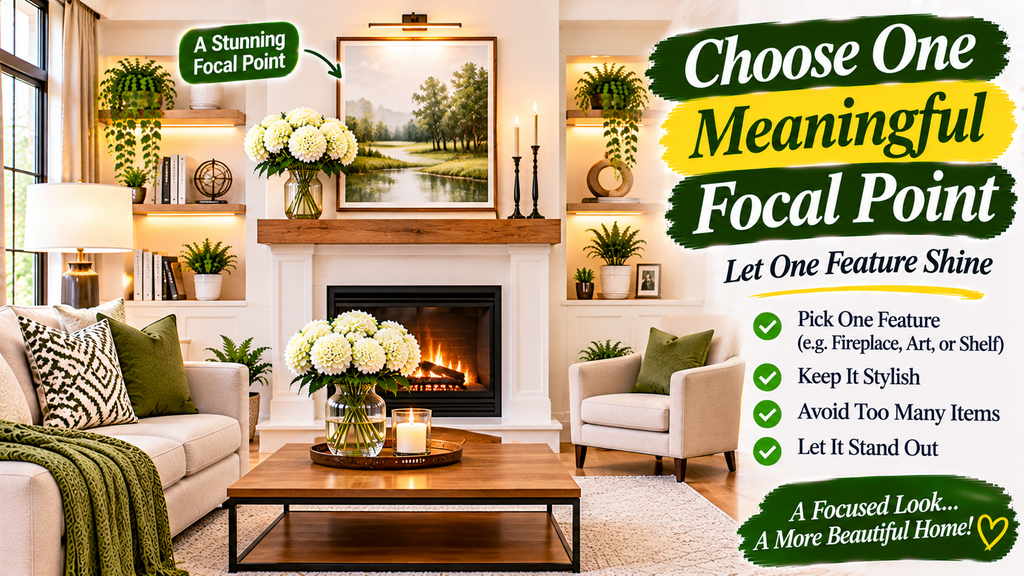
Instead of decorating every wall, pick one thing to show off: a large piece of art, a handsome plant, a beautiful window view, or a simple mirror. When the rest of the room is quiet, the eye knows where to rest. Leave generous empty wall space around the piece so it can breathe.
10. Keep Window Treatments Simple
Heavy drapes and fussy valances clutter a minimalist look. Sheer linen curtains or a simple roller shade let in daylight and keep sight lines clean. Hang curtains close to the ceiling for height, and choose a tone that blends with the wall. If you need darkness for sleep, add a blackout liner.
11. Bring In a Plant or Two
Greenery softens hard lines and adds life to a spare room. One large plant, like a rubber plant or snake plant, often looks better than a crowd of tiny pots. Choose something that suits your light and your habits, since a struggling plant adds stress instead of calm. If you have pets, check that your choice is non-toxic.
12. Build a Simple Daily Reset
A minimalist home only stays that way with a small habit. Spend five minutes each evening returning items to their homes, clearing surfaces, and putting away anything out of place. Give every object a designated spot, like a basket for blankets, a hook for keys, a drawer for remotes. It’s less about design and more about how you live in the space.
Honest Considerations for Beginners
Minimalism isn’t for everyone, and it doesn’t have to be extreme. If you love collecting books, plants, or sentimental objects, a bare room may leave you uncomfortable rather than calm. A better approach is to edit rather than eliminate: keep what you cherish, but display it with care.
Be wary of the shopping trap. It’s easy to buy a lot of “minimalist” products, like matching containers and neutral decor, to achieve the look. That defeats the purpose. Use what you already own first, and replace things only as they wear out.
Consider the people you live with, too. Partners and kids have their own belongings and preferences, and forcing minimalism on others rarely works. Start with your own spaces and agree on shared areas together. Also, don’t throw away things you might genuinely need, like important documents or items that are hard to replace, just to hit a number.
If you rent, focus on removable changes like textiles, lamps, rugs, and plants. If you’re decluttering a lot, donate responsibly and consider selling larger items to offset costs.
Final Thoughts
Minimalism, for a beginner, is mostly a series of small decisions: clear one surface, keep what you use, add warmth through texture and light, and leave some space. You don’t need to follow rules or reach a particular look. Start small, notice how each change feels, and keep going at your own pace. The goal isn’t an empty home. It’s a home that feels easier to live in.
FAQs
Q: Where should a beginner start with minimalist decor?
A: Start with one small surface or drawer. Clear it, sort what you use, and return only what you need.
Q: Does minimalist decor mean white walls and no color?
A: No. Minimalism favors a limited, calm palette, but warm neutrals, soft greens, and muted tones work just as well as white.
Q: How do I keep a minimalist home from feeling cold?
A: Add warm lighting, natural textures like linen and wool, a plant, and a few meaningful objects.
Q: Is minimalism expensive?
A: It doesn’t have to be. You often spend less because you buy fewer items. Invest in a few quality pieces and use what you own for the rest.
Q: Can I be minimalist with kids or pets?
A: Yes. Use closed storage, washable fabrics, and a daily reset routine. It won’t look like a magazine, but it can stay calm.
Leave a Reply