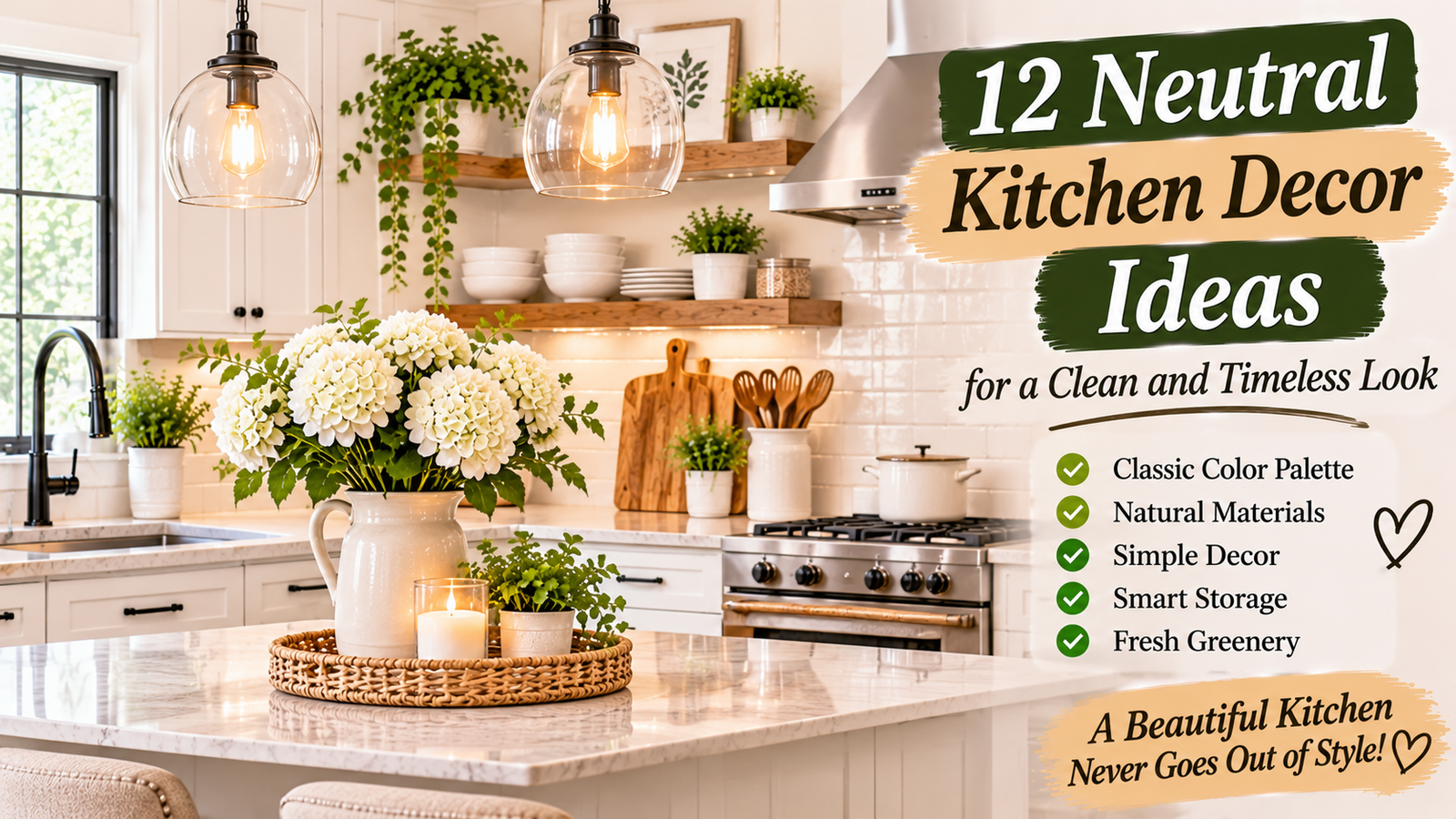
When a friend of mine was renovating her kitchen, she asked the question I hear all the time: “Won’t a neutral kitchen look boring in five years?” I told her the opposite is more likely. The kitchens that date fastest are the ones built around a trend, like the high-gloss lacquer of the early 2000s or the all-gray phase that followed.
A well-made neutral kitchen ages gracefully, because it relies on proportion, materials, and light rather than a fashionable color. Neutral doesn’t mean flat, though. The best ones are layered and quietly rich. Here are twelve ideas for getting that balance right.
1. Choose Your Undertone First

Neutrals lean warm (cream, sand, oat) or cool (soft gray, stone, bone), and mixing them carelessly is the most common reason a kitchen looks “off.” Hold paint and tile samples next to your flooring, countertops, and appliances in both daylight and evening light. A white that looks crisp at noon can turn yellow under warm bulbs. Pick a direction and stay with it.
2. Layer Several Shades Instead of One
A kitchen in a single flat shade can feel like a showroom. Combine three or four related tones: pale walls, mid-tone cabinets, a broader accent in a wood island or hardware. That gentle variation creates depth without adding color.
3. Keep Cabinets Simple and Well Proportioned
Shaker and flat-front doors in warm white, greige, or soft taupe stay current for decades. Avoid heavy ornamentation or trendy finishes. If replacing cabinets isn’t realistic, a careful repaint in a durable cabinet-grade finish and new hardware can transform them. Good prep, meaning degreasing, sanding, and priming, matters more than the paint brand.
4. Choose Countertops That Age Well
Honed quartz, soft-veined quartzite, butcher block, and natural stone in muted tones are all long-lasting choices. Marble is beautiful but etches and stains, so it suits people who accept a patina. Quartz is more forgiving, though cheaper patterns can look repetitive. Always view a full slab, not just a small sample, before deciding.
5. Use a Quiet Backsplash
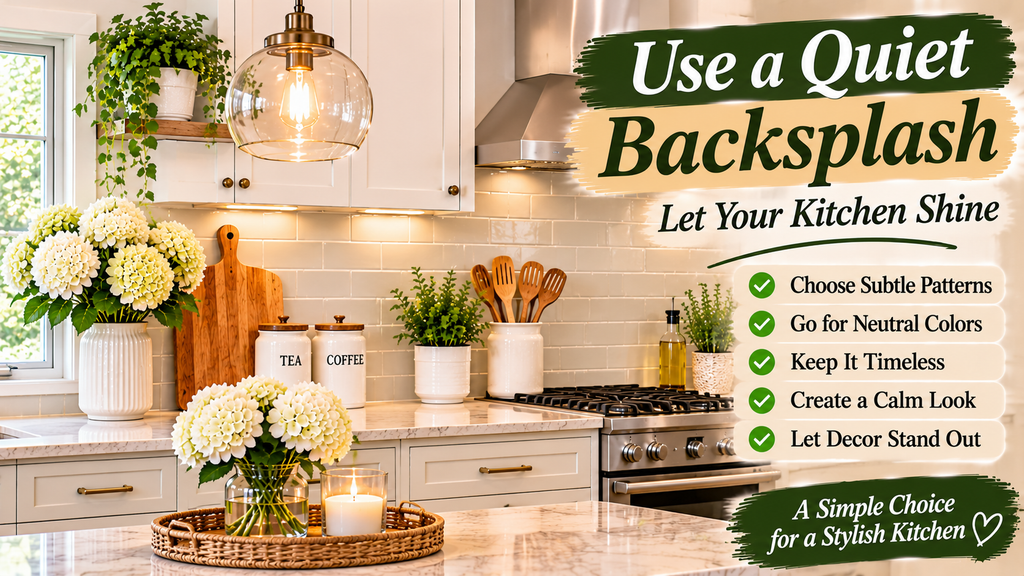
A simple tile in a matching or slightly contrasting neutral tone lets the cabinets and counters shine. Classic subway, zellige-style, or a large-format tile all work. Keep grout lines subtle for a clean look. If you love pattern, save it for a small area like behind the stove rather than the whole wall.
6. Add Warmth With Natural Wood
Neutral kitchens need something organic to keep them from feeling cold. Wood open shelves, a butcher block island, wooden stools, or even a simple cutting board on display adds warmth. Oak and walnut age well, and visible grain brings life to a restrained palette. Mix tones lightly instead of matching everything exactly.
7. Layer Textures Everywhere
When color is limited, texture does the work. Combine matte tile, woven baskets, linen towels, ceramic bowls, and a stone or wooden tray. A single glossy element, such as a glazed vase, can catch the light against matte surfaces. If a neutral kitchen feels dull, it almost always needs more texture, not more objects.
8. Choose Warm, Layered Lighting
Neutrals depend on good light. Use bulbs around 2700K to 3000K, and combine under-cabinet LEDs, pendants over an island or sink, and perhaps a small counter lamp. Harsh, cool lighting can make creamy tones look gray and tired. Dimmers are a worthwhile upgrade when your wiring allows.
9. Pick Hardware and Fixtures in One or Two Finishes
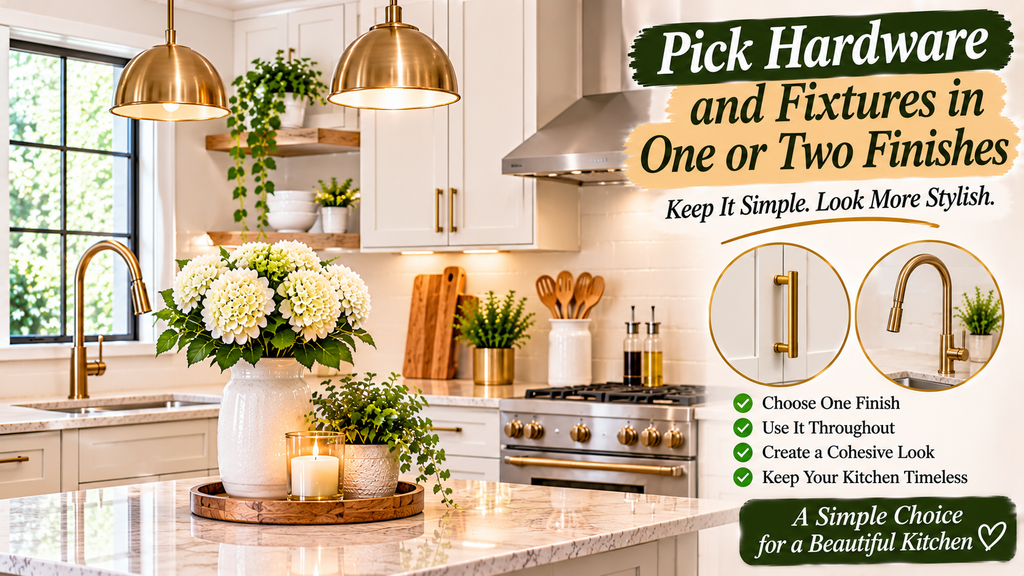
Brushed brass, matte black, and brushed nickel all suit neutral kitchens, but too many finishes can look random. Choose one main metal and one accent, then repeat each at least twice, such as in cabinet pulls, the faucet, and a pendant. Consistent finishes make the room feel planned and calm.
10. Keep Window Treatments Simple
Plain linen or cotton shades, a woven bamboo blind, or a simple café curtain in oatmeal or white lets daylight in without fuss. Choose washable fabrics, since kitchens collect grease and steam, and keep fabric well clear of the stove. If the view is pleasant, leaving the window bare is perfectly acceptable.
11. Add Greenery and Fresh Touches
Plants are the one color that always works in a neutral room. A pot of basil on the sill, a small olive tree, or a bowl of lemons adds freshness. Fresh herbs are both decorative and useful. Check that any plants within reach of pets are non-toxic, and choose varieties that handle kitchen humidity and temperature changes.
12. Edit Surfaces and Display Only What You Love
A timeless kitchen feels calm because it isn’t crowded. Keep counters mostly clear, with a few well-chosen items, such as a tray with oil and salt, a ceramic crock of utensils, and a bowl of fruit. Store appliances out of sight when you can. Clear surfaces make the space feel larger and easier to clean.
Honest Pros and Cons
Neutral kitchens are flexible, calming, and good for resale, but they have drawbacks. Light surfaces show stains and splashes, especially with kids or heavy cooking. A scheme without contrast can feel sterile, so don’t skip texture, wood, and a darker accent. If you crave color, a neutral base makes it easy to add it through towels, art, or flowers you can change with the seasons.
Budget matters too. You don’t have to replace everything. Paint, hardware, lighting, and a new backsplash can change the feel of a kitchen without a full renovation. If you rent, focus on removable changes like peel-and-stick tile, plug-in lighting, rugs, and accessories. For electrical or plumbing work, hire a licensed professional.
Final Thoughts
A clean, timeless neutral kitchen comes from restraint and quality. Choose a consistent undertone, layer tones and textures, add natural wood, and invest in good lighting. Make changes gradually and see how each one feels in your daily routine. The best neutral kitchens aren’t the most dramatic. They’re the ones that look just as good, and work just as well, years from now.
FAQs
Q: What colors count as neutral in a kitchen?
A: White, cream, beige, taupe, greige, gray, and natural wood tones are the most common neutral choices.
Q: How do I keep a neutral kitchen from looking boring?
A: Layer different shades, add natural wood and varied textures, use warm lighting, and include plants and a few darker accents.
Q: Are white kitchens still in style?
A: Yes, especially warm whites paired with natural materials. Stark, cool white with glossy surfaces feels more dated.
Q: What countertop is best for a neutral kitchen?
A: Quartz is durable and low-maintenance, while butcher block and natural stone add warmth. Choose based on how you cook and clean.
Q: Can I make a neutral kitchen warmer?
A: Yes. Use warm bulbs, wooden accents, woven baskets, linen towels, and a few plants to soften the look.
Leave a Reply