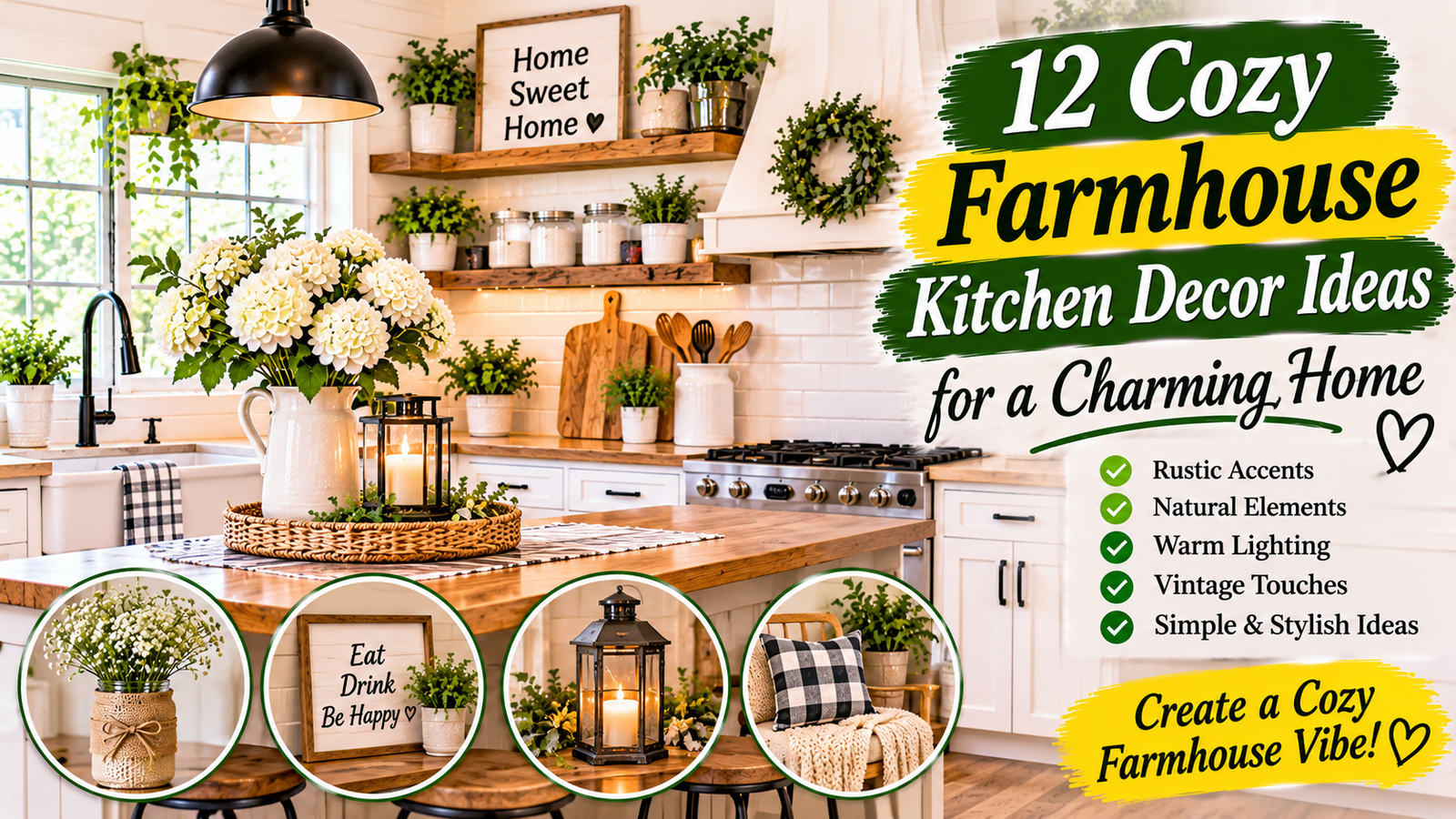
Some of my earliest memories are of my grandmother’s kitchen. There was a scarred wooden table in the middle, a pot of something simmering, and a window above the sink that was always cluttered with herbs in mismatched jars. Nothing in that room was designed. It had simply been lived in for decades. When people talk about farmhouse style, that’s the feeling they’re chasing, even if they don’t always say so.
The trick is to capture that warmth without turning your kitchen into a theme park. Here are twelve ideas that lean on comfort, honest materials, and a bit of age.
1. Start With a Warm, Soft Palette
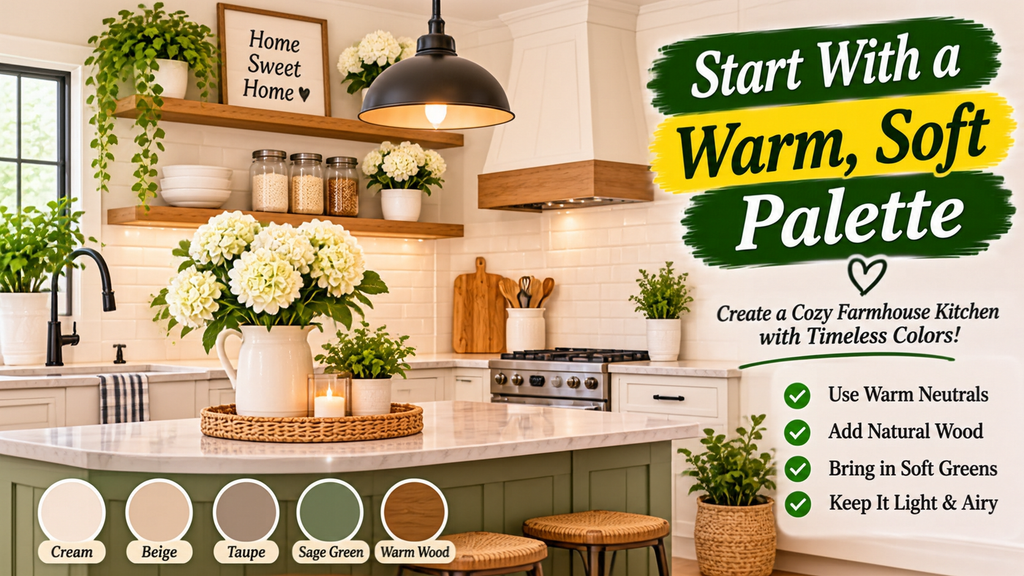
Creamy whites, soft butter yellow, sage green, and muted blue-gray are the backbone of a farmhouse kitchen. Pure bright white can feel stark, so choose whites with a hint of warmth. If you want something bolder, paint the lower cabinets a deep green or navy and keep the uppers light. Test samples on the wall and look at them in morning and evening light before you commit.
2. Choose Shaker or Beadboard Cabinets
Shaker-style doors, with their simple recessed panel, are a farmhouse staple. Beadboard fronts add a country charm. If replacing cabinets isn’t in your budget, paint existing ones and swap the hardware for cup pulls, ring pulls, or simple knobs in iron, aged brass, or oil-rubbed bronze. A mix of finishes is fine as long as it looks intentional.
3. Add a Farmhouse Sink
A deep apron-front sink is the quintessential farmhouse feature, and for good reason: it’s genuinely practical for washing large pots. Fireclay and cast iron are classic, though they’re heavy and the cabinet underneath may need reinforcement. Stainless steel apron sinks are lighter and cheaper if you want the look without the weight. Be aware that fireclay can chip if you drop something heavy.
4. Bring in Butcher Block or Wood Counters
Warm wood counters soften a kitchen that might otherwise feel cold. Butcher block is affordable and develops a patina over time, though it needs regular oiling and care around water. If you don’t want wood everywhere, add a single wooden island top or open shelves in reclaimed oak or pine. Don’t worry about every scratch. Marks are part of the charm.
5. Use Open Shelving With Everyday Pieces
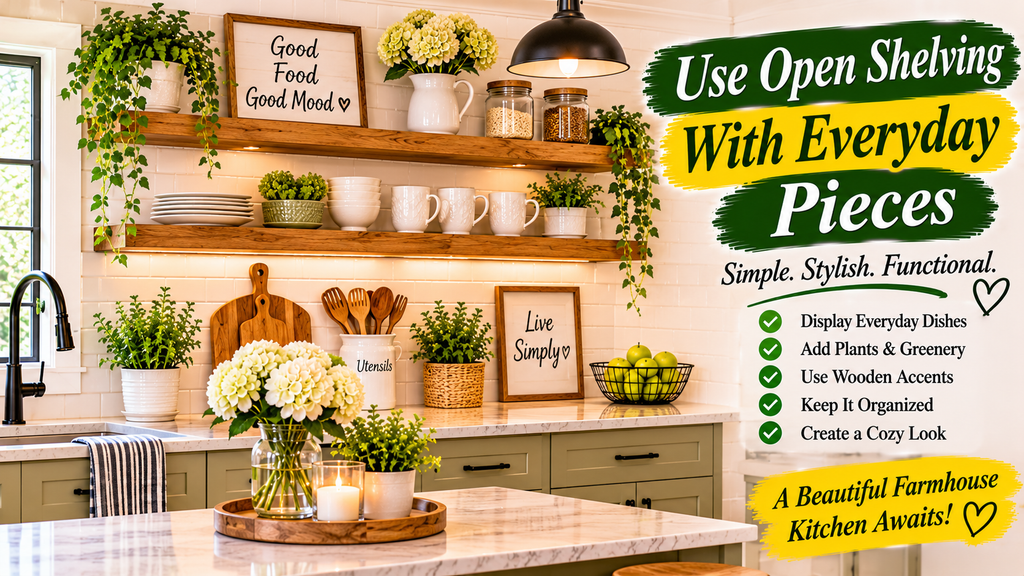
Open shelves are well suited to farmhouse kitchens when they hold things you actually use: stoneware plates, glass jars, wooden bowls, a few enamel pots. Resist the urge to fill every inch. Leave space between items, and group a few pieces in odd numbers. Keep them near the sink or stove as little as possible, since grease and steam are hard on open shelves.
6. Pick a Classic Backsplash
Subway tile in white or soft cream is the safe choice, and it’s popular because it works. Handmade or crackled tiles add irregularity that suits the style. For a more rustic touch, consider beadboard painted in a semi-gloss finish behind the sink area or shiplap in a moisture-safe material. Choose a grout color a shade darker than the tile to hide splashes.
7. Hang Warm, Vintage-Inspired Lighting
Pendant lights in aged brass, black iron, or milk glass set the tone. Barn-style shades and schoolhouse globes are classics. Mix in a warm bulb around 2700K so the room glows in the evening. Over an island, two or three pendants spaced evenly look better than one oversized fixture. Make sure the hanging height is comfortable, roughly 30 to 36 inches above the counter.
8. Include a Farmhouse Table
If space allows, a solid wood table with slightly mismatched chairs feels more inviting than a perfectly matched set. Benches on one side are a good way to seat more people in less room. A table you can sit at, roll out dough on, and do homework on gives the kitchen its heart. Choose a finish you can live with, since a sealed surface will tolerate daily use better than a raw one.
9. Layer Textiles Thoughtfully

Linen dish towels, a gingham or ticking-stripe runner, café curtains, and a woven rug add softness and color. Keep patterns small and the palette consistent. Washable fabrics are essential in a kitchen, so skip anything delicate. Keep curtains clear of the stove and open flames for safety.
10. Display Vintage and Handmade Finds
This is what separates a lived-in kitchen from a showroom. A speckled enamel pitcher, a wooden rolling pin, an old scale, handmade pottery, or a framed vintage recipe card adds personality. Flea markets, estate sales, and thrift shops are better sources than big-box “country” aisles. A handful of real old pieces will do more than a dozen mass-produced signs.
11. Bring in Fresh Greenery and Herbs
A pot of basil on the windowsill, a bunch of rosemary in a jar, or a bowl of lemons on the counter brings the style to life. Fresh flowers in a simple pitcher work too. Choose plants that tolerate kitchen humidity and light, and keep anything that could be toxic to pets out of reach.
12. Keep Things Practical and Edited
Farmhouse kitchens are meant to be used. Choose durable surfaces, easy-to-clean finishes, and storage that suits your habits. A few well-chosen items on display look charming, but a crowded counter just looks messy. Editing is the final step that makes the difference between cozy and cluttered.
What to Keep in Mind
Farmhouse style can go wrong quickly if you lean too hard on trend items. Too many signs, faux distressed finishes, and matching “rustic” accessories can feel like a theme restaurant. It’s worth mixing in older, handmade, or secondhand pieces to keep things authentic.
There are practical trade-offs as well. Wood counters need maintenance, open shelving collects dust, and apron sinks can be tricky to install and chip if mistreated. If you rent, focus on removable changes like textiles, lighting you can swap back, plants, and freestanding furniture. For anything involving plumbing or electrical work, hire a licensed professional.
Budget-wise, you don’t have to do everything at once. Paint, hardware, lighting, and textiles deliver the most impact for the least money.
Final Thoughts
A cozy farmhouse kitchen is about warmth, honest materials, and a sense that the room has been used and loved. Start with a soft palette, good lighting, and a few natural textures, then layer in vintage finds over time. Don’t rush it. The best farmhouse kitchens grow slowly, and they end up feeling like the people who cook in them.
FAQs
Q: What colors suit a farmhouse kitchen?
A: Creamy whites, soft sage, butter yellow, muted blue-gray, and deep green or navy for accent cabinets.
Q: Is a farmhouse sink worth it?
A: Often yes, thanks to its deep basin and classic look. Consider weight, installation, and the risk of chipping with fireclay.
Q: What flooring works for a farmhouse kitchen?
A: Wide-plank wood, wood-look tile, or natural stone are common choices. Pick a durable, water-resistant option.
Q: How do I get the farmhouse look on a budget?
A: Paint cabinets, swap hardware, add warm lighting, use textiles, and shop secondhand for vintage accessories.
Q: Can farmhouse style work in a small kitchen?
A: Yes. Keep colors light, use a few key pieces like a sink or pendant, and avoid overcrowding the space.
Leave a Reply